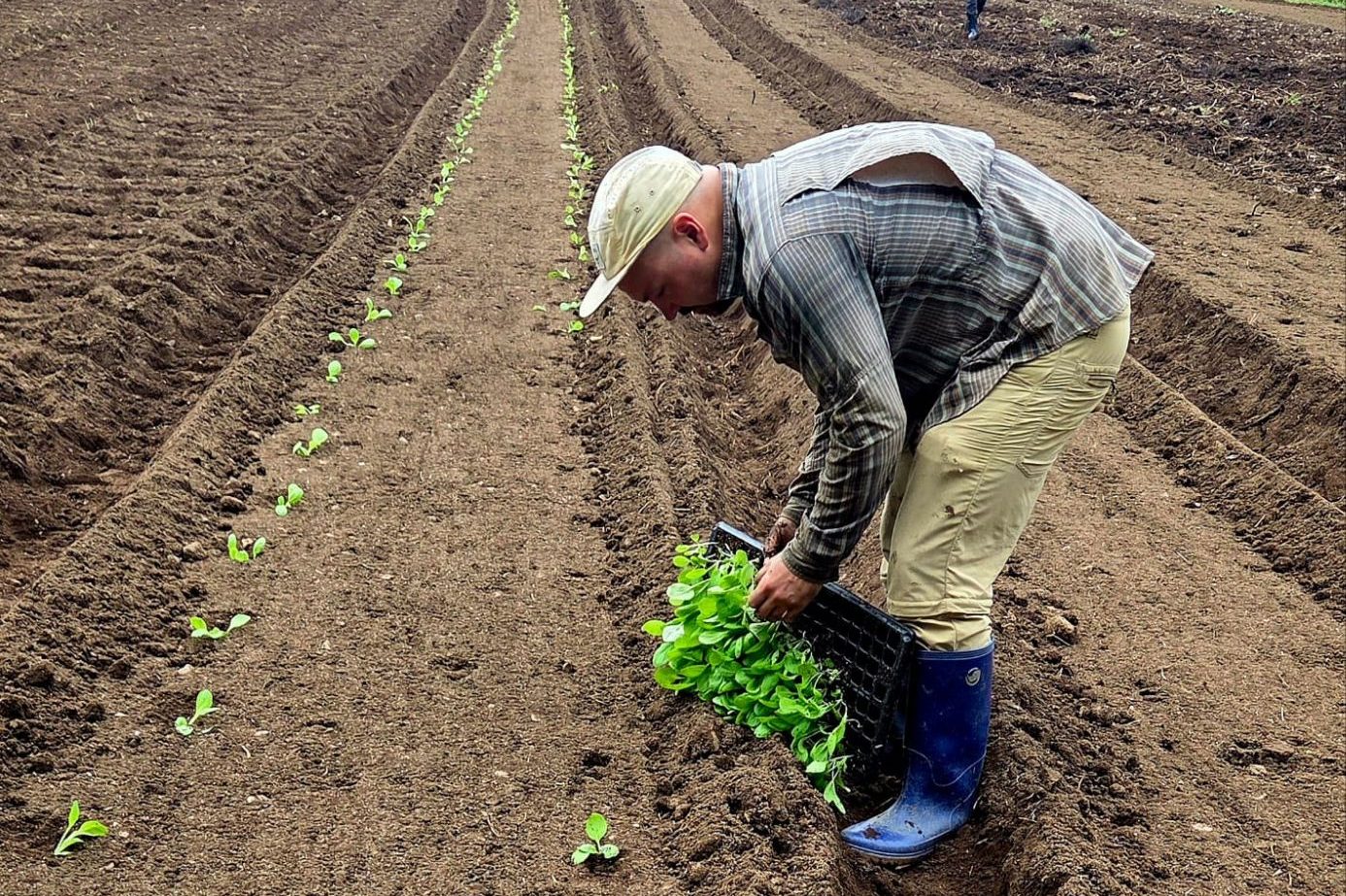
By the time I arrived in Korea, I had already spent more than a decade farming in the United States and three months working on farms in Japan.
I wasn’t coming to Korea looking for someone to teach me how farming works. I was interested in comparison.
Which problems are universal? Which solutions only make sense because of local conditions? Which practices would I take home with me, and which ones would I leave exactly where I found them?
Over the next three months I harvested peppers and corn in Gangwon-do, worked on Korea’s first organic farm in Pocheon, where I learned how gochugaru was processed, and helped make tomato juice, and finally, I arrived at Gucheungam Hermitage at Hwaomsa Temple, where I harvested tea seeds, cut down invasive bamboo between tea trees that were hundreds of years old, and weeded around the hermitage and temples.
Korea didn’t overturn the way I think about farming – it sharpened some of my existing instincts, complicated others, and gave me a much larger set of examples to compare against what I already knew from Utah and Japan.
The Work Changes Less Than the Systems Around It
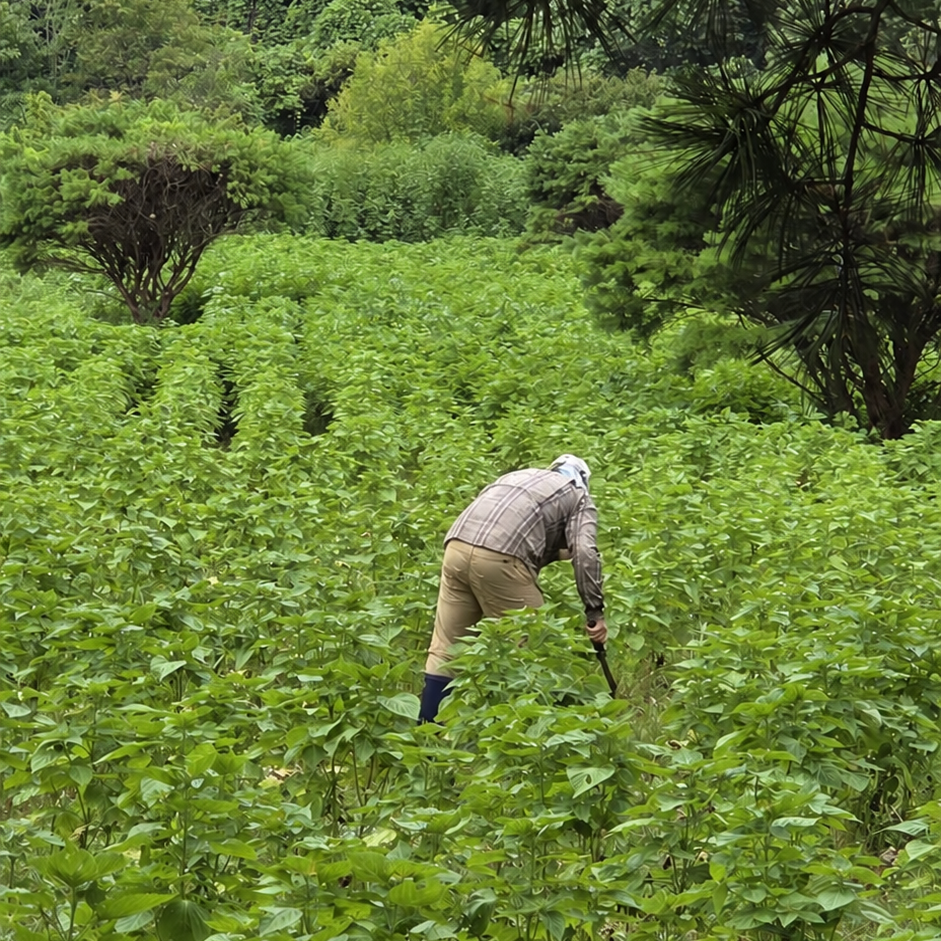
One of the interesting things about farming abroad is how familiar the work can feel.
- Seeds still need to be planted
- Weeds still get ahead of you
- Something always breaks
- Weather changes the plan
- Too much produce becomes ready at exactly the wrong time
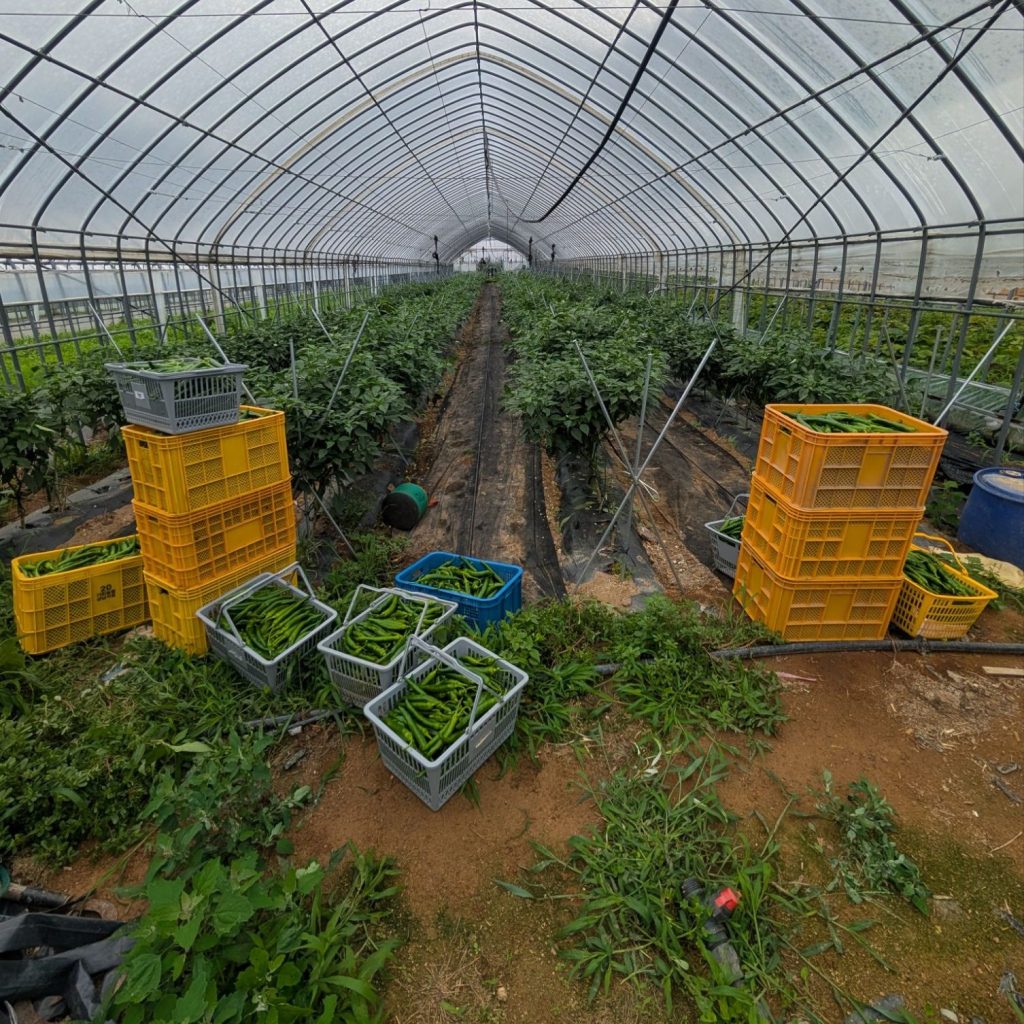
At Yosebi Farm in Inje, we harvested and packed peppers and corn, worked in greenhouses, prepared large orders, cleaned fields, and seeded trays for kimchi cabbage.
The crops were different from what I was used to in Utah, and the systems around the work were different, but the basic pressures were familiar.
- There is only so much labor
- There is only so much time
- The weather doesn’t care about your plans
That was also true in Japan.
After six months of farm work across the two countries, I became more interested in where the differences actually appeared: tools, markets, food culture, land use, labor, infrastructure, and the way farms fit into households and communities.
The work itself was often the easy part to recognize – the reasons behind it were more interesting.
Context Matters, but That Doesn’t Mean Everything Is Equally Good
I have a habit of evaluating work almost automatically.
- Could this be faster?
- Is this the right tool?
- Why are we doing this by hand?
- Why is this planted here?
- Is there a simpler way to accomplish the same thing?
Part of that comes from spending years on a small vegetable farm where labor is always limited. Part of it probably comes from my background in software and systems.
Korea did not convince me to stop thinking that way.
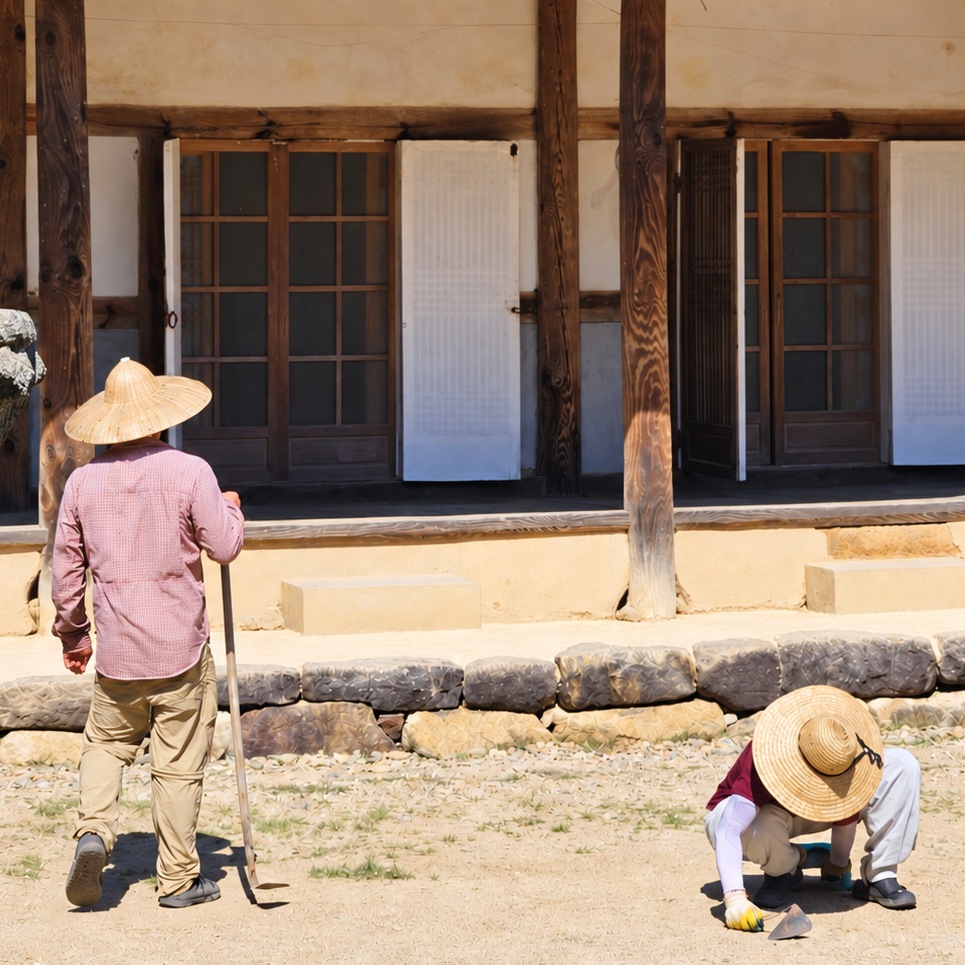
At Gucheungam Hermitage, for example, much of the weeding was being done with short hand hoes while sitting on small stools. I eventually found an old long-handled hoe, sharpened it, and started working standing up. I could cover dramatically more ground.
The result wasn’t as meticulous, but I could kill roughly 80 percent of the weeds in perhaps 20 percent of the time, rake up the larger ones, and move on.
Other people noticed, wanted to try it, and more long-handled hoes started appearing. At one point I overheard someone call it the “Tyler method,” which was funny considering I had not, in fact, invented hoeing.
I still think the long-handled hoe was the better tool for much of that work. But traveling has made me more conscious of a useful distinction: Understanding why someone works a certain way and deciding whether there is a better way are two separate questions.
Context matters.
That doesn’t mean every existing practice is optimal – sometimes there really is a better tool literally leaning against the wall.
I Came Away Even More Convinced That Simple Tools Matter
Korea reinforced something I already believed strongly from farming in Utah Small improvements in tools and workflow can have an outsized effect.
They also tend to be less exciting than people expect.
- A sharpened hoe
- A repair instead of a replacement
- Doing tasks in a different order
- Using the right piece of equipment for the scale of the job
- Keeping a simple system simple
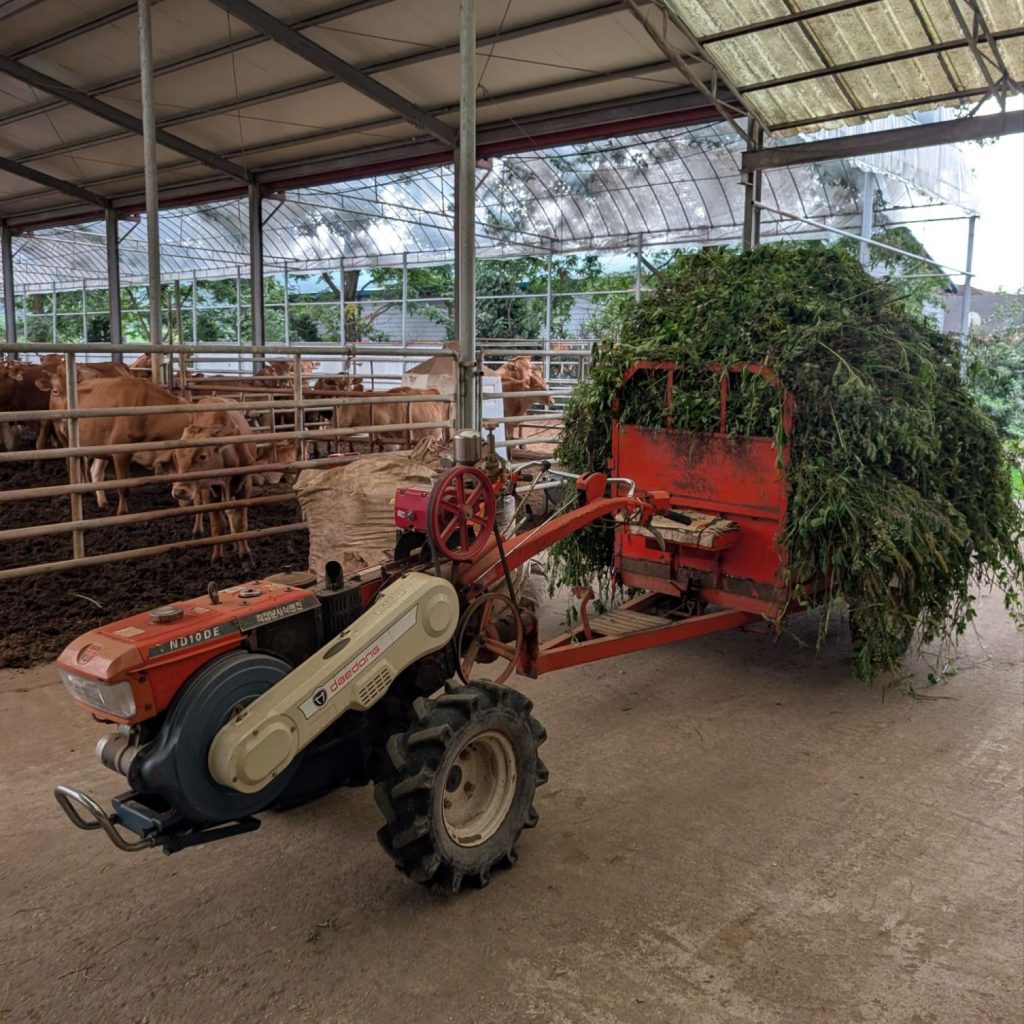
At Pocheon, I replaced an electrical breaker when the shed lights stopped working. At Gucheungam, the long-handled hoe changed how quickly an entire category of work could be done.
None of this was innovative technology and is partly the point.
I have a computer science background and I like technology, but agriculture is very good at reminding me that many of the highest-value improvements are boring.
- A better tool
- A clearer process
- A repair
- A task eliminated rather than automated
That was true in Utah. It was true in Japan. Korea gave me more examples.
Food Explains a Lot About Farming
I already knew that crop choices are connected to markets and food culture. Living around Korean farms made that relationship harder to treat as an abstraction.
Peppers are the easiest example.
I harvested them repeatedly. I saw them dried and milled into gochugaru. I saw jars of doenjang and ganjang aging on farms. Kimchi cabbage went into seedling trays because there was a very specific use waiting for it on the other end. The crops make more sense when you understand the food.
That becomes especially obvious when comparing Korea with Japan and the United States.
The same farmer could have the same soil, the same tractor, and the same technical ability, but completely different markets because people expect to eat different things.
A crop plan reflects agronomy, but it also reflects cuisine, preservation, household habits, and history.
That’s one reason I became less interested in collecting “Asian farming techniques” as if they could simply be packed into a suitcase and brought home. Techniques live inside larger systems.
Some Context Is Much Bigger Than the Farm
One of the more striking experiences I had in Korea wasn’t on a farm where I was staying.
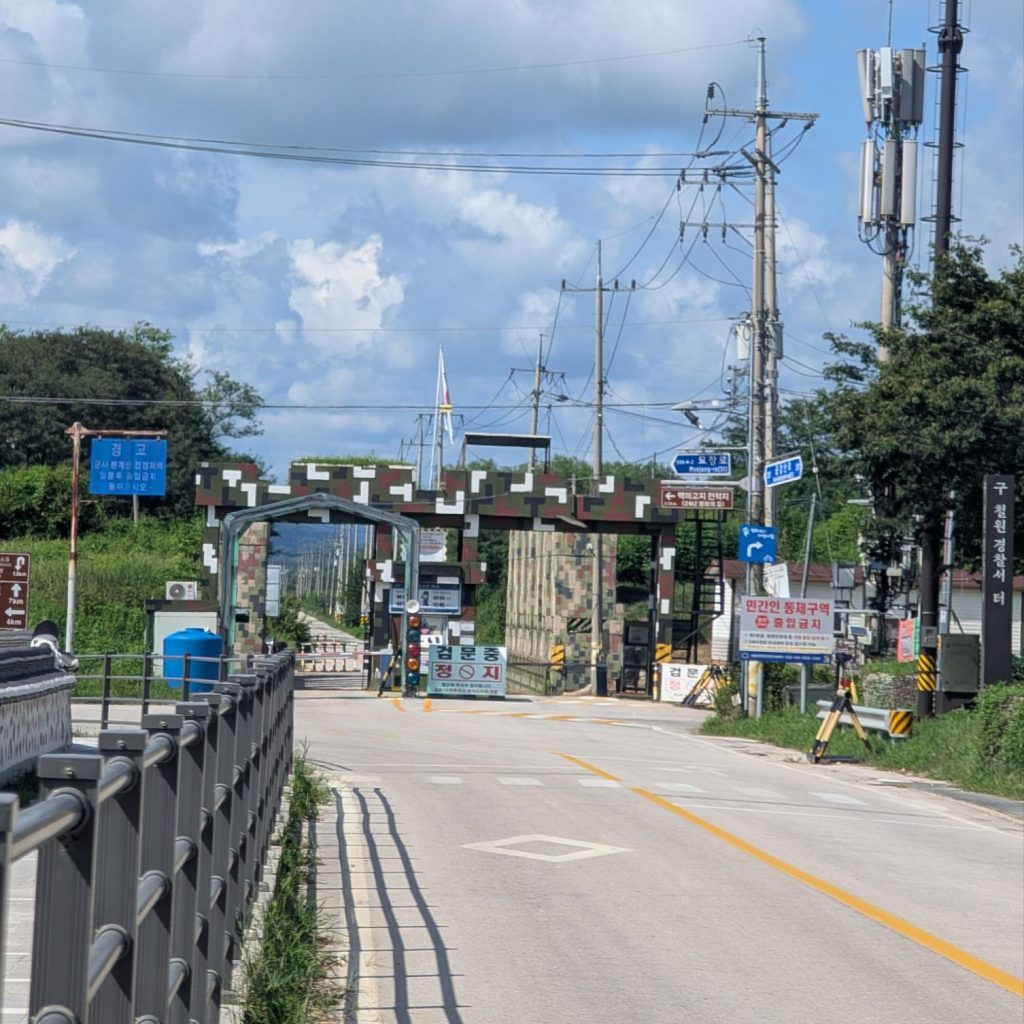
While at Peace Tree Farm, Won and Kim-seonsaengnim took me to the White Horse Highland battleground near the DMZ.
Through binoculars I could see North Korean flags in the distance. There were barbed-wire areas marking land that might still contain land mines from the Korean War – and people were farming there.
Farmers pass through checkpoints to work their fields. I was told that farmers had been injured or killed while reclaiming land after the war.
It is difficult to look at agricultural land in quite the same way after that.
A field can be soil, irrigation, yield, labor, and profit – it can also sit inside history.
That experience was an extreme example, but the broader point showed up repeatedly: farms are shaped by things far outside the field boundary.
- Land policy
- War
- Urbanization
- Family history
- Government programs
- Labor availability
- Market demands
A farm is always responding to more than agronomy.
The People Are What I’ll Remember Most
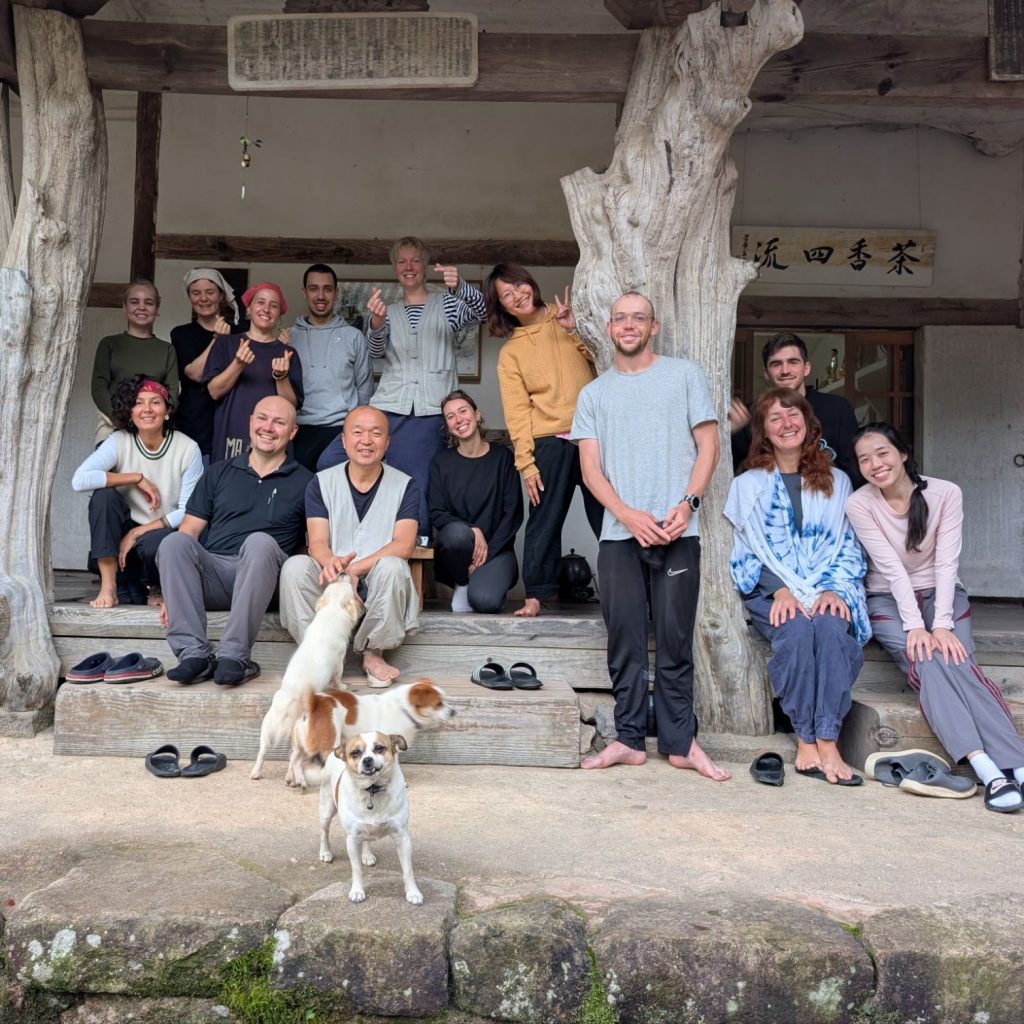
For all the agricultural comparisons I made, many of my strongest memories from Korea are still people.
- Working with Sang-yeong, Eric, and Martin at Yosebi.
- Spending a weekend with Seong-hyeon and his childhood friends, all now in their 50s – and jumping into the stream together.
- Being absorbed into multigenerational daily life at Peace Tree Farm with Won and Kim-seonsaengnim, and their children and grandchildren
- Deep conversations about heavy metal with Sunim (Monk) over tea, learning the fierce affection of Korean grandmothers from Bosalnim, working and eating with the other WWOOFers at Hwaomsa.
Making new and lasting connections wasn’t entirely new. I had already experienced something similar during three months living with a host family in Japan.
But Korea reinforced how different this kind of travel is from simply visiting places.
Work gives you a role. You aren’t only observing someone’s life. For a little while, you are helping with it.
- You harvest what needs harvesting
- You carry something
- You fix something
- You wash dishes
- You eat together
Eventually the relationship stops feeling entirely transactional.
At Peace Tree especially, leaving felt much less like checking out of accommodation than leaving a household I had temporarily become part of.
That may have mattered to me more than any particular farming technique I learned.
Korea Also Made Me Think About What Farms Are For
I remain very interested in efficiency. I notice wasted movement. I care about labor. I like making systems work better – that didn’t change.
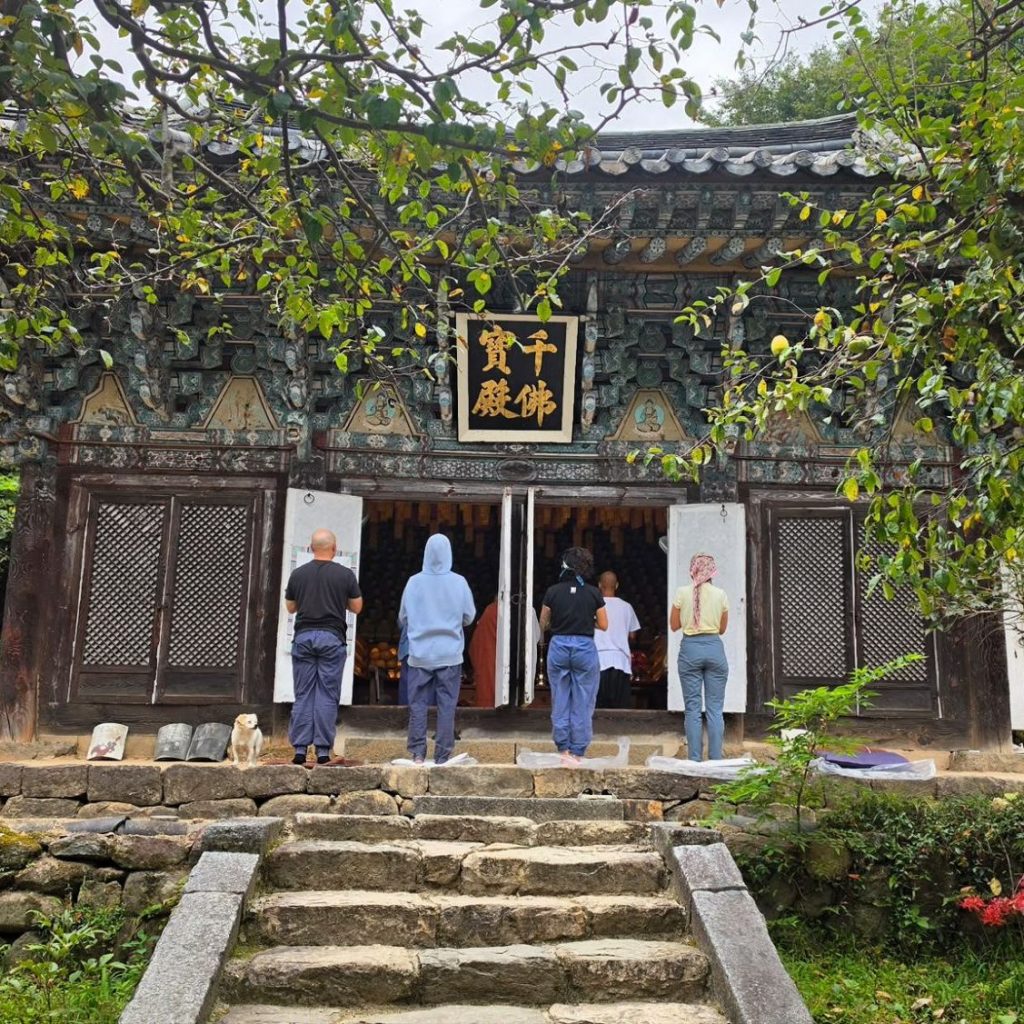
But spending time at Gucheungam at Hwaomsa Temple gave me a useful contrast. Work there still needed to be done, but output per hour was clearly not the only thing organizing the day. There were meals, ceremonies, visitors, relationships, weather, and the rhythm of the place itself.
I had shaved my beard before going to the temple and, with my shaved head, kept getting mistaken for a monk. A month later I was pretty certain I was still more farmer than monk.
Put me in front of a weedy patch of ground and eventually I start calculating how quickly we can get through it. But the experience did reinforce a question worth asking occasionally:
- Faster for what?
Commercial farms face real economic pressures. Efficiency matters because labor costs money and crops do not wait. But farms are also places where people are trying to build lives. Those two things do not always point in exactly the same direction.
What Actually Changed
Three months in Korea didn’t make me abandon the way I farm or think. If anything, some of my instincts became stronger.
- I still believe good tools matter enormously
- I still think labor efficiency deserves serious attention
- I still think simple systems often outperform complicated ones
And after seeing similar operational problems appear in Utah, Japan, and Korea, I’m more convinced that much of good farm management comes down to noticing small recurring problems and fixing them before everyone accepts them as normal.
What changed was the size of my comparison set. I now have more examples against which to test what I already thought I knew.
A technique can work beautifully because of the conditions around it rather than because it is inherently superior. A practice can also persist simply because it is familiar, even when there is a better option nearby. Both can be true.
Traveling as a farmer has made me more interested in figuring out which is which.
I came to Korea as an experienced farmer. I’m leaving as an experienced farmer who has now spent six months working inside agricultural systems very different from the one where I learned to farm. I think that is more valuable than coming home with a notebook full of Korean techniques to copy.
- There are things I’ll borrow
- Things I’ll reject
- Things I’ll probably understand differently years from now
And when I farm again in the United States, I suspect Korea will show up in small decisions rather than dramatic ones: a tool I choose, a crop I look at differently, a process I simplify, or a moment when I wait a little longer before deciding that somebody else is doing it wrong.