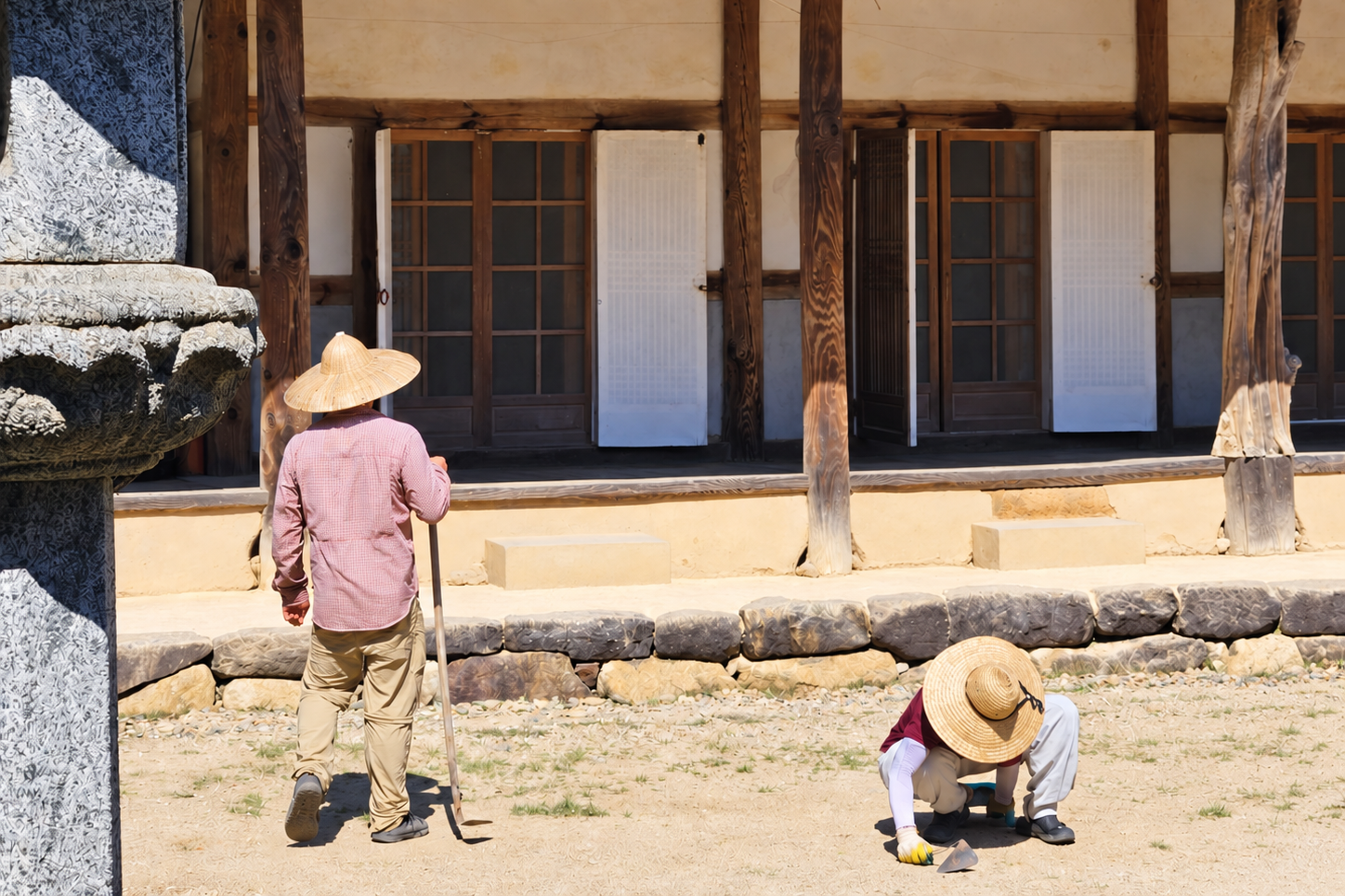
I spent about a month at Gucheungam Hermitage, a small Buddhist hermitage above Hwaeomsa Temple on the slopes of Jirisan in South Korea.
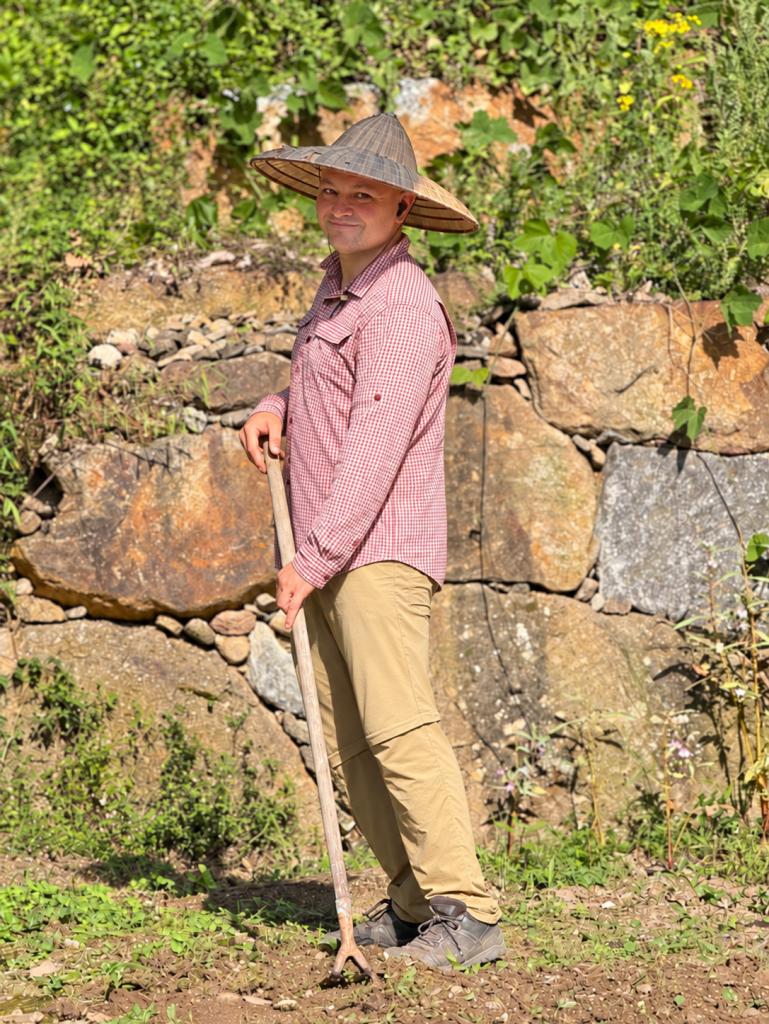
Before arriving, I had shaved my beard. Between the shaved head, simple clothes, and the fact that I was living at a Buddhist hermitage, I kept getting mistaken for a monk.
After a month there, though, one thing became increasingly clear: I am definitely more farmer than monk.
A Different Pace
Much of the weeding around the hermitage was done slowly and meticulously. People sat on little stools or crouched close to the ground with short-handled hoes, working through an area one weed at a time. There was something almost appropriately monastic about it: careful, patient, attentive.
I could appreciate the approach. If anywhere in the world weeding were to be done this way, would not a buddhist hermitage high in the mountains of Asia be the place?
But after spending most of my adult life growing vegetables, I also couldn’t stop looking at all that ground and thinking about how much other work needed to be done too.
Eventually, I found an old long-handled hoe somewhere around the hermitage. It didn’t look like it had been used much.
I sharpened the edge and started working.
80% Results with 20% of the Effort
The difference was immediate. Instead of sitting down and removing weeds individually, I could stand upright and sweep the sharpened blade just beneath the surface of the soil.
- One stroke killed several weeds
- A few strokes cleared an entire area
- I could use a rake to gather the larger weeds, and move on
The result wasn’t perfect – if someone followed behind me with a hand hoe, they could certainly find weeds I had missed. But that wasn’t really the point.
My rough way of thinking about it was:
I could kill 80 percent of the weeds in 20 percent of the time – on a production farm, that’s often a very good trade.
If you have limited labor and a large area to cover, getting five areas mostly clean can be much more useful than getting one area perfectly clean while the other four disappear under weeds.
Too Much Credit
People started noticing how quickly I was moving.
Then they wanted to try it. More long-handled hoes started appearing from wherever old tools were stored around the hermitage, and other people began working the same way. At one point I overheard someone refer to it as the “Tyler method.”
That made me laugh.
I would like the historical record to be clear that I did not invent hoeing. Farmers have been standing upright and killing weeds with hoes for quite a while. If anything, the funny part was that the tool and the technique were already there. All I really contributed was finding an old hoe, sharpening it, and using it for the sort of work it was designed to do.
Precision vs Speed
The experience highlighted a distinction I think matters well beyond weeding – hand hoes aren’t bad tools.
In tight spaces, around valuable plants, against stones, or anywhere that demanded precision, they were probably better than what I was doing.
The long-handled hoe optimized for something different:
Speed. That changes the question from: Which tool does the best job? to: What result am I trying to achieve?
If the goal is immaculate ground, meticulous hand weeding makes sense. If the goal is preventing thousands of weeds from reaching maturity while you have a limited number of people and hours, speed becomes much more important.
Neither approach is inherently right. They solve different problems.
The Tool Changes the Job
What interested me most wasn’t that the hoe was faster. That part is obvious. It was how dramatically changing one simple tool changed the scale at which I could think about the work.
Sitting on a stool, I was looking at the weeds directly in front of me – standing with a long-handled hoe, I was looking at the whole area. The tool changed my posture, my speed, the amount of ground I could cover, and ultimately the standard of “finished” work that made sense.
- No engine
- No chemicals
- No subscriptions
- No Wifi or bluetooth
Just a sharpened piece of steel attached to a slightly longer stick.
Some of the most valuable improvements I’ve seen in agriculture are like that. They aren’t revolutionary inventions. They’re small changes in tools or workflow that make repeated work substantially easier.
More Farmer Than Monk
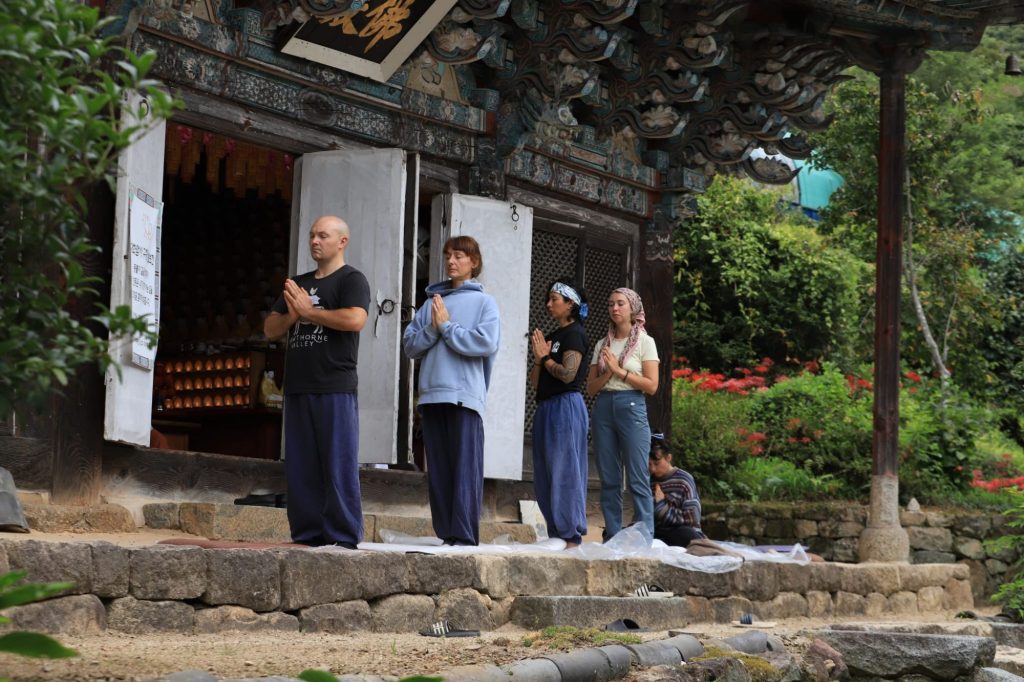
I learned a lot during my month at Gucheungam, much of it from people whose pace and priorities were very different from what I’m accustomed to on a production farm.
- There’s value in slowing down
- There’s value in doing things carefully
- There’s value in work that isn’t measured in output per hour
But apparently, even after shaving my beard and spending a month getting mistaken for a monk, you can put me in front of a weedy patch of ground and my farmer brain is still going to start calculating how quickly we can get through it.
I came to Korea partly because I wanted to learn how other people live and work. At Gucheungam I was reminded that exchange goes both ways.
- Sometimes you bring home a new technique
- Sometimes you leave one behind
- Sometimes you accidentally get your name attached to a farming practice that probably several thousand years old.