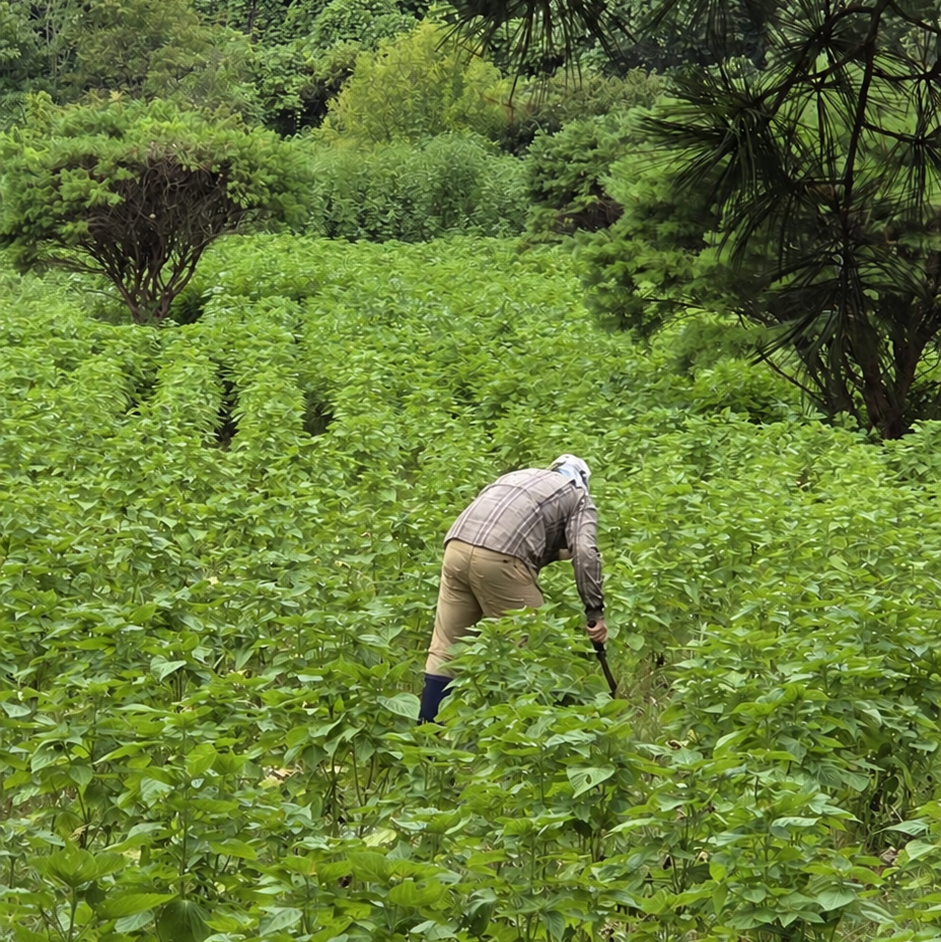


By the time I arrived at Gucheungam Hermitage at Hwaeomsa, I had already spent almost a decade farming in the United States and nearly six months working on farms in Japan and Korea. That experience had given me a habit that is difficult to turn off. Why this tool? Why this crop? Why is this planted here? Why are we doing this by hand? Could this be faster? Put me in front of a weedy field and I’ll quickly find a way to clear the place.
At Gucheungam, much of the weeding was being done with short hand hoes while sitting on small stools. I eventually found an old long-handled hoe, sharpened it, and started working standing up. The result wasn’t as meticulous, but I could kill most of the weeds in a fraction of the time, rake up the larger ones, and move on.
Other people noticed, and more long-handled hoes started appearing. At one point I overheard someone call it the “Tyler method,” which was funny considering I had not, in fact, invented hoeing. My first instinct was simple: this was a better tool for the job, and I still think it was.
But the longer I worked in Korea, the more I found myself looking beyond the task itself. A tool, a crop, a field, even the pace of a workday seemed to reflect something larger around it.
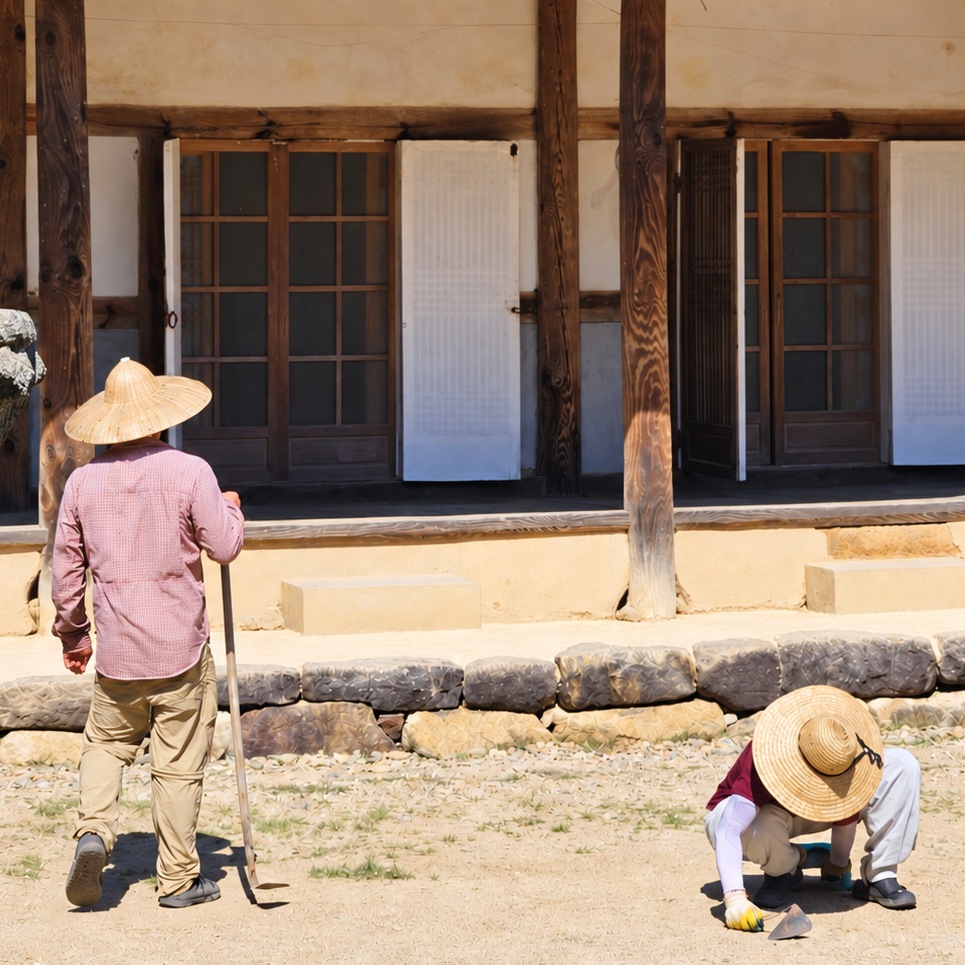
A Net Around the Field
Hwaeomsa takes its name from the Korean Hwaeom Buddhist tradition. One image associated with that tradition is Indra’s Net.
Imagine an enormous net stretching endlessly in every direction, with a jewel hanging at every intersection. Each jewel reflects every other jewel in the net. Within each reflection, the other jewels appear again, each reflecting all the others in turn. No single jewel stands completely on its own. Look closely enough at one part and the rest of the net appears inside it.
I’m not qualified to turn that into a lesson about Buddhist philosophy, but as a farmer, the image immediately appealed to me. The longer I worked in Korea, the more agriculture began to resemble it.
A farming practice can appear to be an isolated decision: this crop, this tool, this field layout, this way of weeding. But look closely and the things around it begin to appear. Climate influences the crop. Cuisine shapes the market. Labor affects the tools. Land prices shape the size of the farm. History, family, government policy, and habit all leave their marks.
The physical work was usually the easiest part for me to recognize. What interested me more was everything reflected inside it.
A Pepper Field Is a Jewel
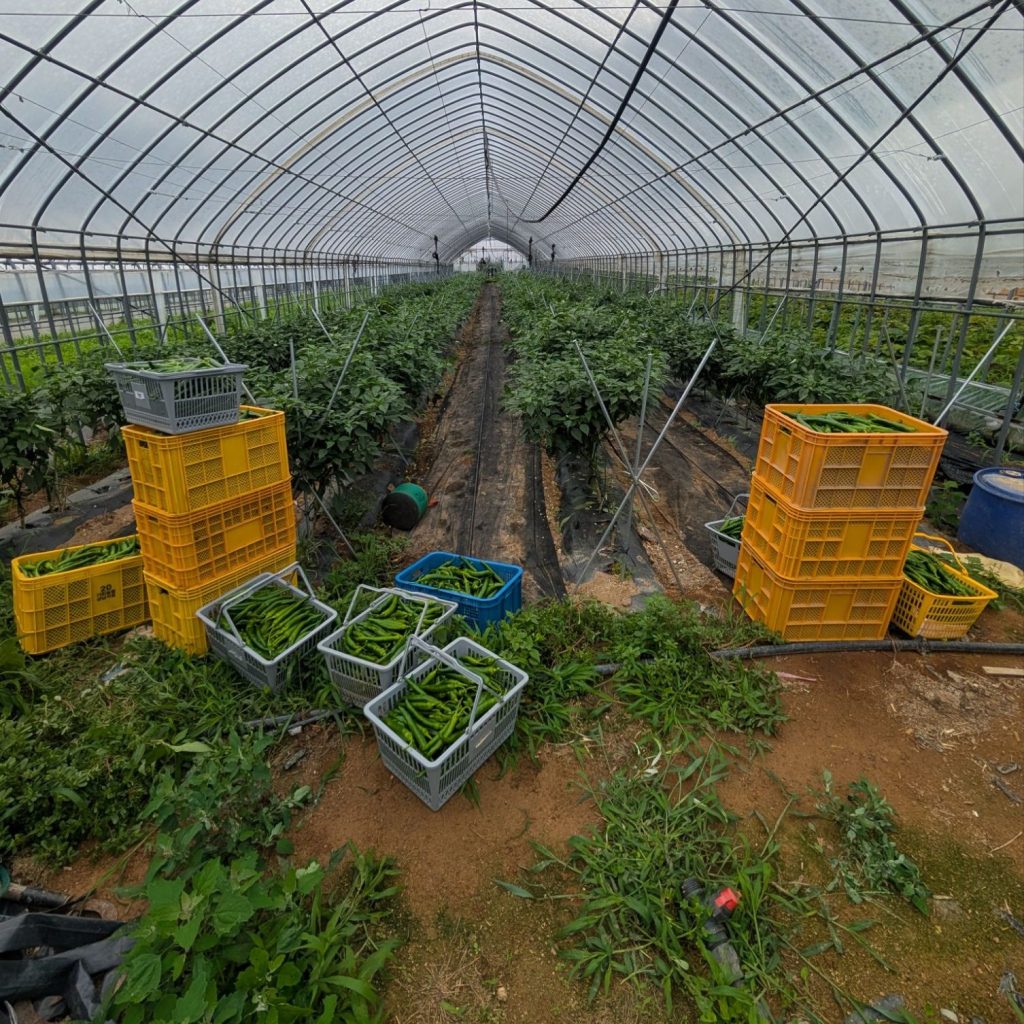
At Yosebi Farm in Gangwon-do, much of our work involved peppers and corn. We harvested, packed large orders, worked in greenhouses, cleared weeds, and seeded trays of cabbage destined for kimchi. The work itself was familiar. Crops still had to be harvested, weeds still got ahead of us, weather still changed the plan, and somehow too much produce always seemed to become ready at once.
What was different was everything around the work. After seeing how deeply gochugaru runs through Korean cuisine, vast fields of peppers made more sense. After seeing jars of doenjang and ganjang aging on farms, soybean fields looked different. Trays of kimchi cabbage were connected to a very specific food culture waiting at the other end.
A crop plan reflects agronomy, but it also reflects what people expect to find on the dinner table. The pepper field and the kitchen were not separate subjects. One was reflected in the other.
That sounds obvious when written down, but it becomes much more tangible when you spend your morning harvesting a crop and your evening eating the reason it was planted.
The Net Reaches Beyond the Farm
Peace Tree Farm made that idea harder to ignore in a different way. Its history was tied to Korea’s organic farming movement, but what I experienced there was never simply an agricultural operation. It was also a home and a multigenerational family. Work, meals, children, grandchildren, visitors, and ordinary household life overlapped until it became difficult to say exactly where the farm ended and the rest of life began.
Won was a master of hospitality. Rather than feeling like someone who had simply arrived to exchange labor for food and a place to sleep, I gradually felt folded into the household. Meals stretched into conversation, people came and went, and the farm became inseparable from the family living on it. Agriculture was still at the center, but it was only one part of a much larger web of relationships.
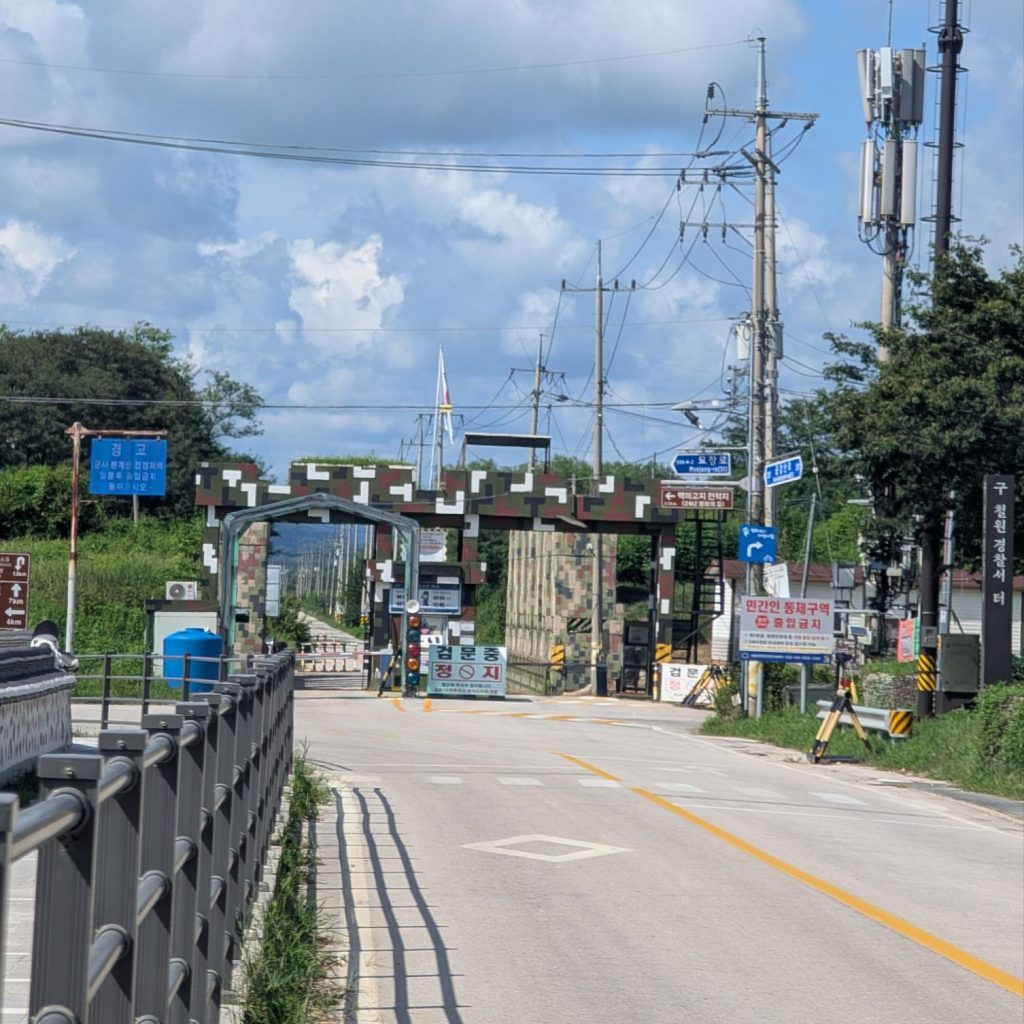
One day, Won and Kim-seonsaengnim took me to the White Horse Ridge battleground near the DMZ. It was the kind of place I probably never would have sought out on my own. Through binoculars I could see North Korean flags in the distance, while nearby, areas behind barbed wire marked ground that might still contain mines left from the Korean War.
People were farming there.
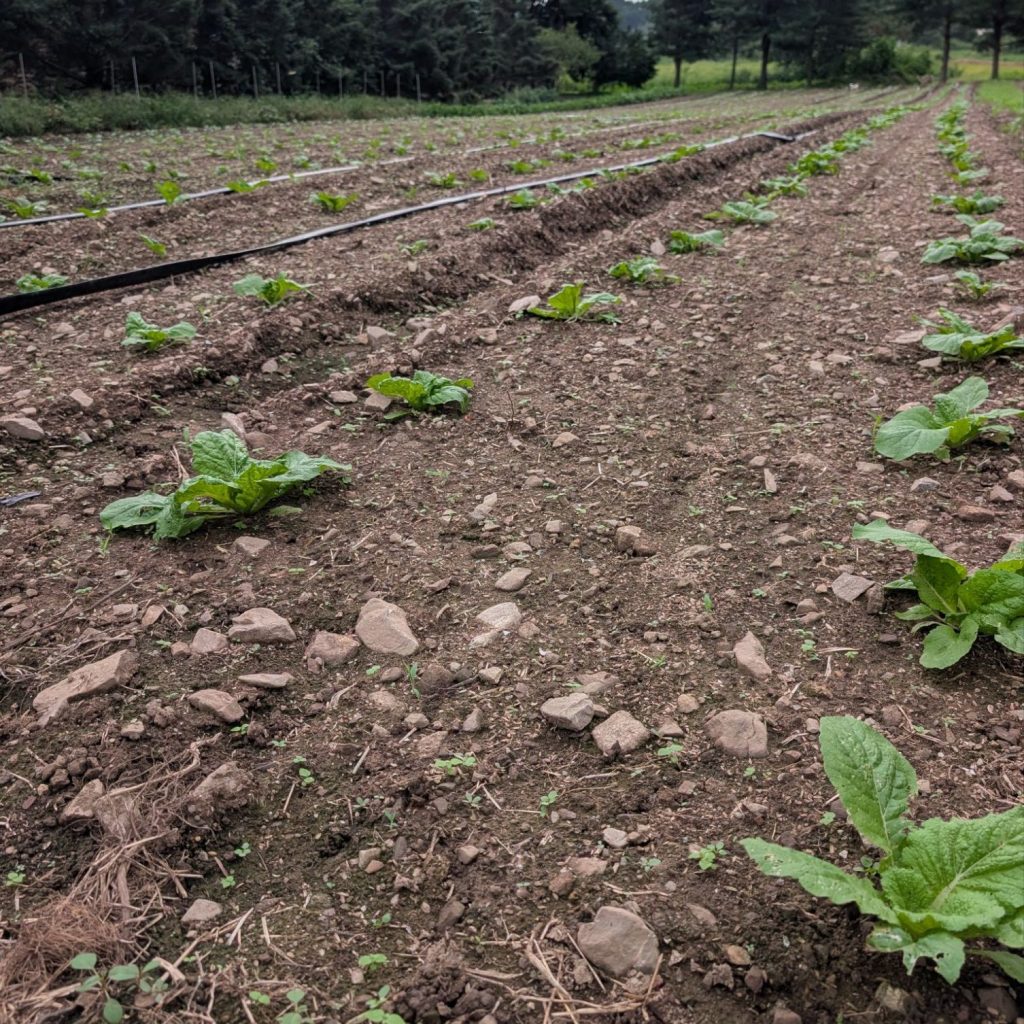
Farmers pass through checkpoints to reach fields in a landscape where the consequences of a war fought generations ago are still physically present. Standing there made it difficult to think about agricultural land only in terms of soil, irrigation, labor, yield, and profit.
A field can be all of those things while also sitting inside a war. The same piece of ground can be shaped by military borders, government policy, family history, land ownership, markets, and events that happened before the current farmer was born.
Even my own presence there was part of the net. I was standing near the DMZ because I had come to work on a farm, become close to the people living there, and been invited into a part of their world I otherwise would never have seen.
The field boundary is not where the system ends.
Seeing the Net Doesn’t Mean Accepting Everything
There is a danger in taking the metaphor too far. Seeing the relationships around a practice does not mean deciding that every practice is good.
That distinction matters to me because I still evaluate work almost automatically. Years on a small vegetable farm taught me to notice wasted movement, unnecessary labor, bad tools, and jobs that have become inefficient simply because nobody has stopped to question them. My background in software probably strengthened that tendency rather than weakening it.
The long-handled hoe at Gucheungam is a good example. I can understand that the short hoes and stools belonged to a particular way of working and still believe that, for clearing a large area, the long-handled hoe was better. Those ideas are not contradictory.
A practice can be deeply embedded in a web of history, habit, labor, and expectation and still be inefficient. Sometimes there is an important reason for doing something differently. Sometimes there is simply a better tool leaning against the wall.
Seeing the net does not require surrendering judgment. It just means understanding more of what I am judging.
Faster for What?
Gucheungam complicated another part of the net: my own instinct toward efficiency.
On a commercial farm, I think efficiency matters enormously. Labor costs money, crops do not wait, and a task that takes twice as long as necessary eventually creates problems somewhere else in the operation. That way of thinking had been ingrained in me by years of vegetable production, and I carried it with me everywhere.
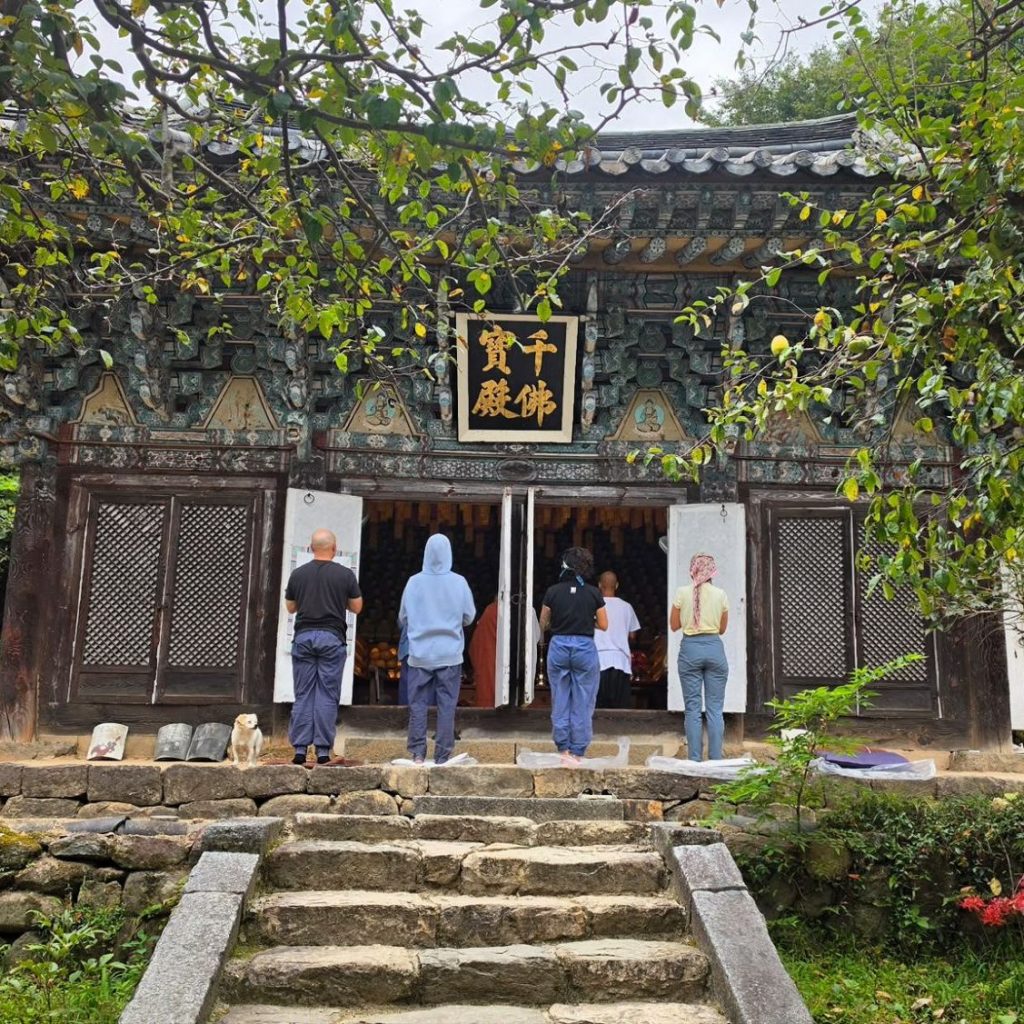
At the hermitage, though, the day moved according to a different rhythm. Every day included a rice-offering prayer to the Buddha that lasted around forty-five minutes, sometimes longer. Huge temple bells sounded across the grounds in the morning, at midday, and again in the evening. Meals, ceremonies, visitors, conversations, tea, weather, and work all occupied their own space in the day.
The weeds still needed to be cleared. Bamboo still needed to be cut back from tea trees that had been growing there for generations. There was plenty of physical work. But the day was not arranged around squeezing the maximum amount of production from every hour.
I had shaved my beard before arriving and, with my already shaved head, kept getting mistaken for a monk. After about a month there, I was certain I was still more farmer than monk. Put me in front of enough weeds and I will eventually start calculating how quickly we can get through them.
But at Gucheungam, efficiency was only one value among many. Clearing the weeds faster did not make the prayer shorter, the bell ring sooner, or the meal arrive earlier. The work existed inside the rhythm of the place rather than dictating that rhythm itself.
That left me with a question I still think is useful: Faster for what?
Even my desire for efficiency was not some neutral standard floating above everything else. It had its own place in the net. It reflected the commercial farm where I learned to work, the limitations of labor and money there, my background in software, and probably something about my personality as well.
I wasn’t standing outside the system evaluating it. I was bringing my own system with me.
Seeing the Whole Net
Three months in Korea did not overturn the way I think about farming. I still believe good tools matter enormously, labor efficiency deserves serious attention, and simple systems often outperform complicated ones. I also still have a hard time watching people repeat an unnecessary problem without wanting to fix it.
What changed was what I noticed around those problems.
When I arrived in Korea, I tended to look closely at individual practices. By the time I left, I was paying much more attention to what they reflected. The pepper field reflected the kitchen. The field near the DMZ reflected a war. Peace Tree reflected a family, a history, and a movement in Korean agriculture. The hoe reflected assumptions about labor and what a finished job should look like. The pace of Gucheungam reflected prayer, community, and a purpose that could not be measured only in output per hour.
Even my own instinct toward efficiency reflected the farm where I learned to work.
None of those things existed alone.
That may be what I like most about Indra’s Net as a way of thinking about agriculture. The metaphor is more interesting than simply saying that everything is connected. Look closely enough at one thing and you begin to see the others reflected inside it. A pepper field contains a cuisine. A field near the DMZ contains a war. A tool contains assumptions about labor. A workday contains ideas about what the day is for.
The same is true anywhere, not only in Korea. Every farm is sitting inside a much larger system of food, land, history, economics, family, culture, and place. The farm may be where those forces become visible, but they do not begin or end at the edge of the field.
A field is never only a field.